The last two turns ...
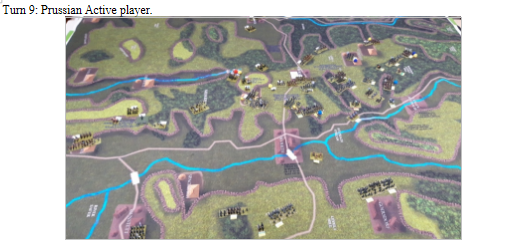
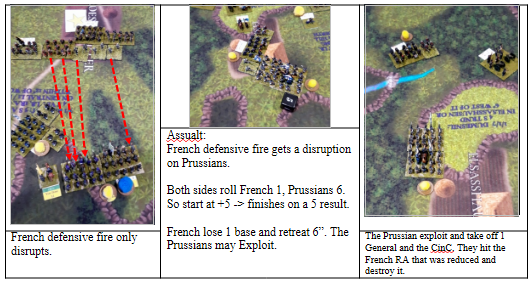
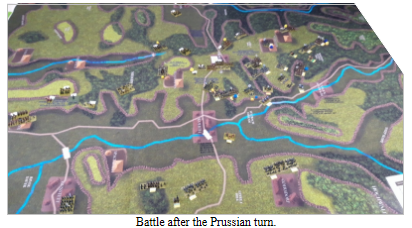
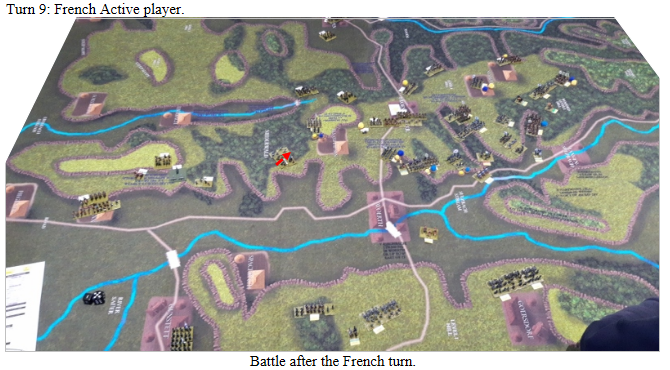
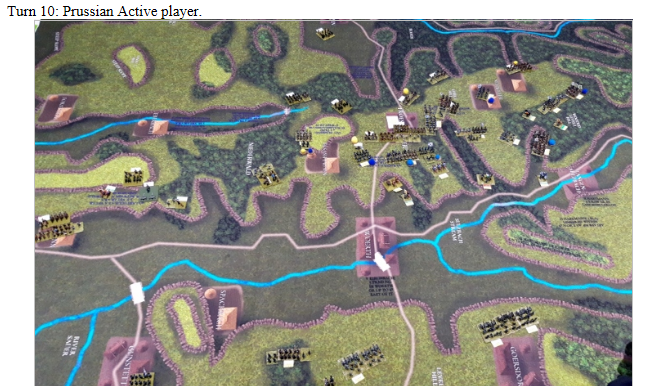
Prussians make one last push on Froeschwiller using units from the North and East. Again the move rolls were only successful in 1 in 3 most halted or only got a half move. But contact was made so an assault is possible.
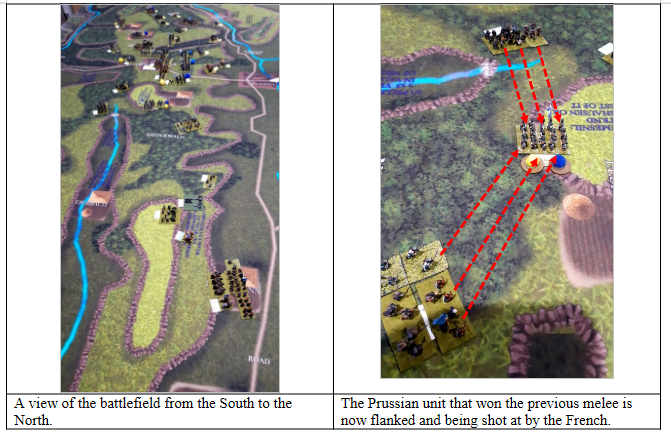
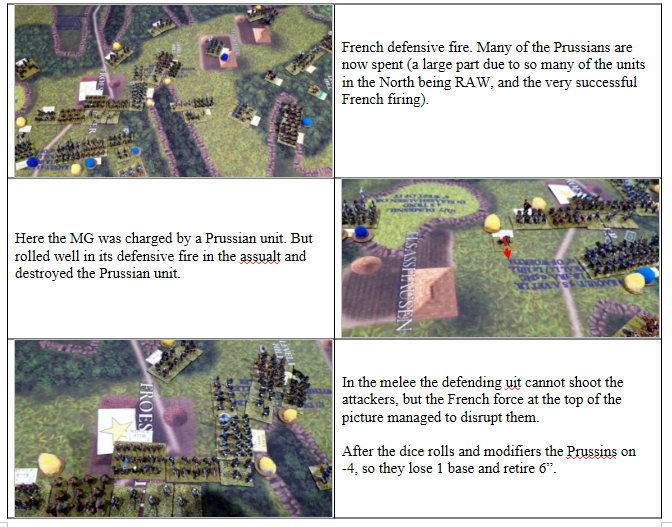
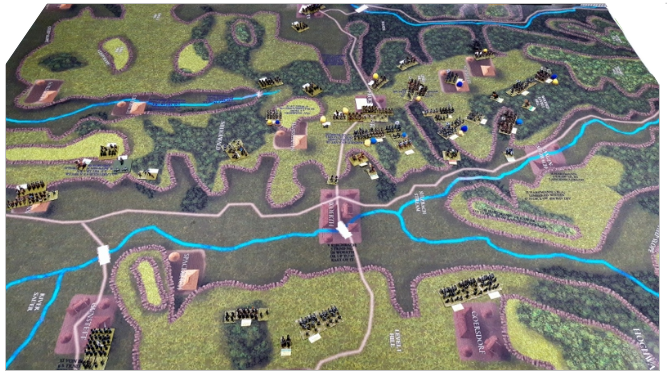
End of Prussian turn.
As the scenario requires the Prussians to get at 3 victory points to win and they currently have 0 we stopped at this point. Conclusion French victory.
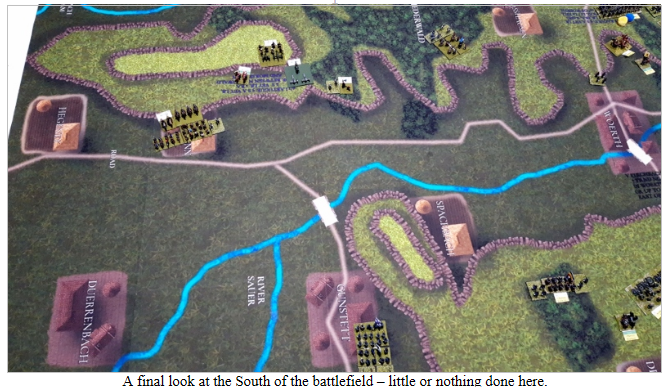
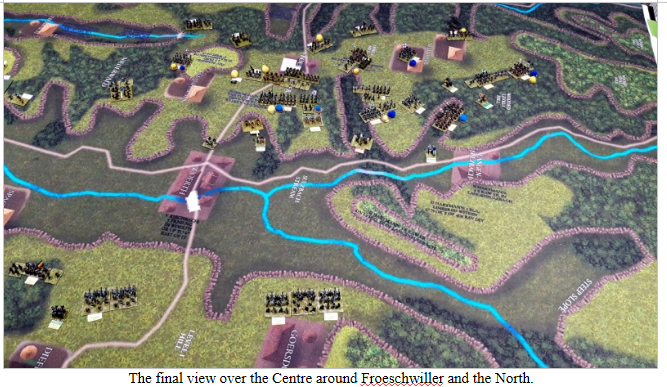
I have now seen Froeschwiller player 5 or more times and the Prussians have a very difficult time of it in every game – usually scoring 0 points. Here it was lost in turn 7; The Prussians were not quite ready to go, units just arriving, and as the half move made the Prussian player too cautious – staying in the woods. Whereas moving out and being aggressive should have forced the French to spread the fire across the enemy. The Prussians used the terrain to help them deploy. But could it have been done better? Also the positions of the BLA – could they be in a better position? Just means another try. The two players here were both new to BBB and Franco Prussian battles but made a good account of themselves.
Some background:
To speed up setup did require the units to be prepared beforehand (printed cardboard labels attached with frog tape to base of leader unit), but the whole battle was fought with 2 box files of figures. The 10mm here are 40mm x 30mm (used for another set of rules and borrowed from a mate, I did paint up spare 20mm x 30mm with 4 figures to represent a single base, and on the same size of base 2 figures to represent skirmishers) so larger than 1” x 1” Chris Pringle suggests, but still played well. Just had to be careful in remembering which unit was in march column or in depth.
Another major setup speed up was to add the deployment positions. The writing did not impede on the play, just impeded on a few of the close up pictures.
For the markers for DISRUPTED, LOW AMMO, SPENT, REDUCED ARTILLERY etc I used a bag of small multi-coloured pompoms from the Range (for about £1) and used invisible No More Nails to glue them on a bag of ½ pence pieces that were just ideal for the markers.
After playing a few games, of the Napoleonic battles, it was clear to help speed things up that a Brigade of “4 S” was better using 3 regular stands and a skirmish stand – a good visual on the benefits the unit had. We also found that putting the yellow SILENCED marker, or the black LOW AMMO at the front of the Brigade when it occurred, then moved the marker to the back on the next phase, or when the artillery had been moved back its minimum ½ move got new players into the rhythm of the turn sequence a lot faster. Allowed with a little housekeeping a good way to keep on top of what was happening where and when. It allowed the game to proceed quicker and with fewer arguments of what happened on a previous turn and when markers could be removed. The artillery being limbered also came under this. A limber is attached to the back of the artillery, pointing the direction it is being moved (so no worries – was that limbered? Or deployed?). The addition of if the artillery piece had moved ½, unlimbered the gun was deployed pointing in its required direction with the limber across the front of the base – to show no shooting this phase. Whereas if the gun that was limbered is deployed in place the gun was deployed pointing in its required direction with the limber perpendicular across the back of the base – to show half effect shooting this phase. Making the players responsible for the housekeeping kept them focused and we had very few cases of mistakes being made that players might feel would have had a major effect on the battle.
Having Zone of control templates was very useful, showing the 3” as in the rule book but also showing the 45o to the edge for firing / front arc, and another double 45o at the Front Centre Position for movement and when penalties would be applied.
I have the unit labels on a PDF in the download section, along with a crib sheet to keep things right on what turn things turn up and victory points etc.
Bye for now. | 



